

Measles
Discover the facts about measles, a highly infectious disease that can lead to health complications. Here you’ll find information on how to prevent its spread.
FAQ
Measles is a very contagious disease caused by a virus that spreads through the air. It mainly affects the respiratory system. Measles can be serious, especially for young children under age five, pregnant women, and those with weakened immune systems. Common complications include ear infections and diarrhea. More serious complications can include pneumonia, hearing loss, brain swelling (encephalitis), pregnancy complications, and in rare cases, death.
Measles is spread through the air. When an infected person breathes, coughs, or sneezes, tiny droplets carrying the virus are released. The virus can live up to two hours in the air after a person sneezes or coughs, making it easy to spread.
Measles is best prevented with the measles, mumps, and rubella (MMR) vaccine. The MMR vaccine is safe and very effective. Two doses are about 97% effective at preventing measles, and one dose is about 93% effective. After vaccination, the body begins making antibodies within a few days. Within two to three weeks, the immune system is ready to protect against measles. For most people, this protection lasts for life, and booster shots are not needed.
The combined measles, mumps, and rubella (MMR) vaccine has been used since 1971 and contains the safest, well-studied forms of each vaccine.
After vaccination, the body begins making antibodies within a few days. Within two to three weeks, the immune system is ready to protect against measles. For most people, this protection lasts for life, and booster shots are not needed.
Measles is very contagious. A person can spread the virus from about four days before the rash appears until four days after the rash begins. This means people can spread measles before they even know they are sick.
Measles can spread by being in the same room, home, office, or waiting area as someone who has it, even up to two hours after the carrier has left. If one person has measles, about 9 out of 10 people who are not protected and have close contact will also become infected.
Measles symptoms usually begin 10 to 12 days after exposure. Early symptoms include a high fever, cough, runny nose, and red, watery eyes. The fever often lasts 2 to 4 days and can rise as high as 103°F to 105°F.
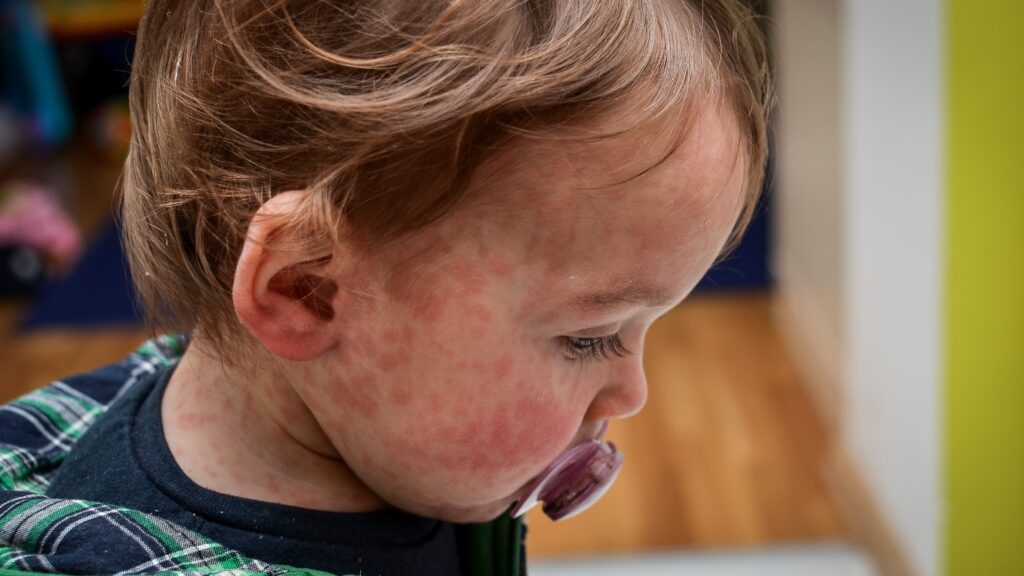
The measles rash usually appears about 14 days after exposure and lasts 5 to 6 days. It often starts at the hairline, then spreads to the face and upper neck. Over the next few days, the rash moves downward to the rest of the body, including the hands and feet.
People most at risk for measles include those who are not vaccinated or who have not received both doses of the MMR vaccine. Infants under 12 months old are also at higher risk because they are too young to be vaccinated.
If an unvaccinated person is in the same room as someone with measles, there is about a 90% chance they will become infected. Pregnant people, those with weakened immune systems, and adults over age 20 are more likely to have severe illness and complications.
Travelers may also be at higher risk, especially if they visit places where measles outbreaks are happening and are not vaccinated.
Vitamin A is not a substitute for the measles vaccine and does not prevent measles. Because high doses can be harmful, vitamin A should only be given under the guidance of a healthcare provider.

How Can I Locate My Immunization Records to Know if I Have Been Immunized?
Contact your healthcare provider or check MyChart regarding your past history.
Schools, colleges, prior employers, or the military (if you were enlisted) may also have records of your immunization history.
Depending on your age, your vaccine history may also be recorded in the immunization registry of the state where vaccines were received.
If you received vaccines in Ohio, we may be able to help with that! Call us at 330-723-9688, option 2.
Where to Get the MMR Vaccine
If you need the measles, mumps, and rubella (MMR) vaccine, speak with your healthcare provider. If you do not have a healthcare provider, our Health Center is available to give the MMR vaccine. Call us at 330-723-9688, option 1 to set up an appointment.