



Reduce their Risk

In the United States, motor vehicle crashes are a leading cause of death among children. The safest way to protect your child is to choose and correctly use the right car seat or booster seat for your child every time they are in the car. The information below can help you choose the right seat and to make sure it is installed correctly. Always follow the recommendations and requirements in your car seat manufactures’ instructions and your vehicle’s  owners’ manual when installing a car seat.

Are you looking for help to install your car seat? We offer free car seat checks and installations:

  • When: Second Wednesday of every month
  • Time: 2:00 pm to 5:30 pm
  • Registration: Appointments are required. Call us at 330-723-9688, option 5 to register for an appointment

Recommended Car Seats Based on Child’s Age and Size
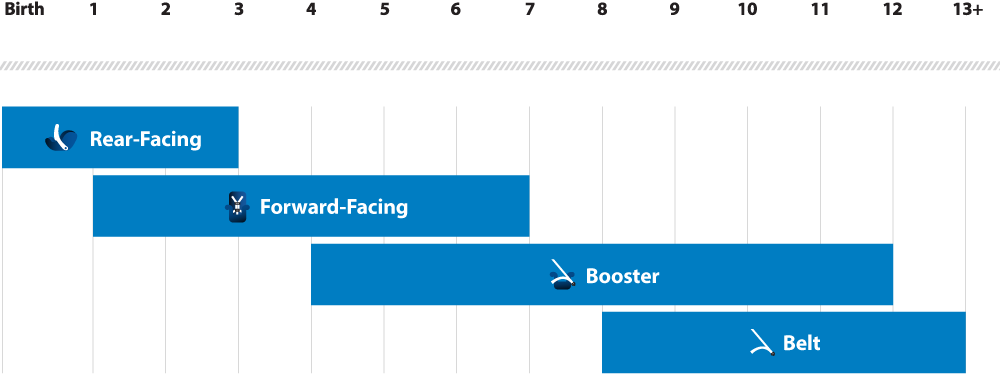
Birth to 12 months

Your child under age 1 should always ride in a rear-facing car seat. There are different types of rear-facing car seats:

  • Infant-only seats can only be used rear-facing.
  • Convertible and all-in-one car seats typically have higher height and weight limits for the rear-facing position, allowing you to keep your child rear-facing for a longer period of time.

1 to 3 Years

Keep your child rear-facing as long as possible. It’s the best way to keep him or her safe. Your child should remain in a rear-facing car seat until he or she reaches the top height or weight limit allowed by your car seat’s manufacturer. Once your child outgrows the rear-facing car seat, your child is ready to travel in a forward-facing car seat with a harness and tether.

1 to 3 Years

Keep your child rear-facing as long as possible. It’s the best way to keep him or her safe. Your child should remain in a rear-facing car seat until he or she reaches the top height or weight limit allowed by your car seat’s manufacturer. Once your child outgrows the rear-facing car seat, your child is ready to travel in a forward-facing car seat with a harness and tether.

4 to 7 Years

Keep your child in a forward-facing car seat with a harness and tether until he or she reaches the top height or weight limit allowed by your car seat’s manufacturer. Once your child outgrows the forward-facing car seat with a harness, it’s time to travel in a booster seat, but still in the back seat.

4 to 7 Years

Keep your child in a forward-facing car seat with a harness and tether until he or she reaches the top height or weight limit allowed by your car seat’s manufacturer. Once your child outgrows the forward-facing car seat with a harness, it’s time to travel in a booster seat, but still in the back seat.

8 to 12 Years

Keep your child in a booster seat until he or she is big enough to fit in a seat belt properly. For a seat belt to fit properly the lap belt must lie snugly across the upper thighs, not the stomach. The shoulder belt should lie snugly across the shoulder and chest and not cross the neck or face. Remember: your child should still ride in the back seat because it’s safer there.

8 to 12 Years

Keep your child in a booster seat until he or she is big enough to fit in a seat belt properly. For a seat belt to fit properly the lap belt must lie snugly across the upper thighs, not the stomach. The shoulder belt should lie snugly across the shoulder and chest and not cross the neck or face. Remember: your child should still ride in the back seat because it’s safer there.

The Ohio Department of Health’s child passenger safety (CPS) program, Ohio Buckles Buckeyes (OBB), provides child safety seats and booster seats to eligible, low income families in all Ohio counties. The overall goals of this program are to increase the availability of child safety seats for families who could not otherwise afford them and to increase correct installation and proper use of child safety seats.

This program provides:

– Child safety seats
– Child booster seats
– CPS education

In order to receive an OBB seat, income eligible families must attend an educational class provided by trained local CPS staff. In this session, the parent/caregiver(s) receives important education on how to properly use the car seat for their child, and they are instructed on how to correctly install the seat in their vehicle.

Call us at 330-723-9688, option 5 to schedule an appointment.

For more information, visit the National Highway Traffic Safety Administration (NHTSA) website on Car Seats and Booster Seats. For installation videos and tutorials, check you car seat manufacturer’s website.